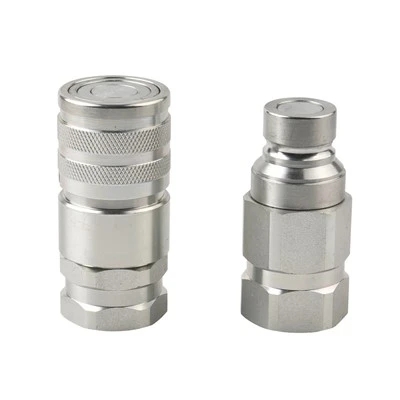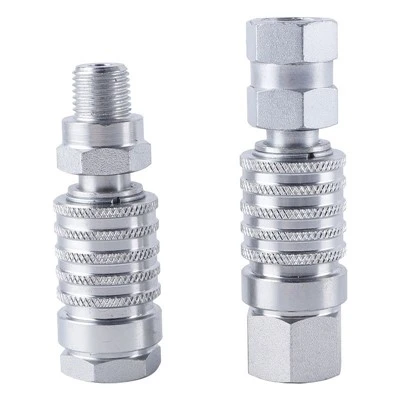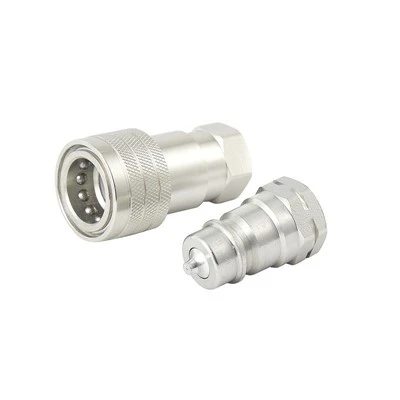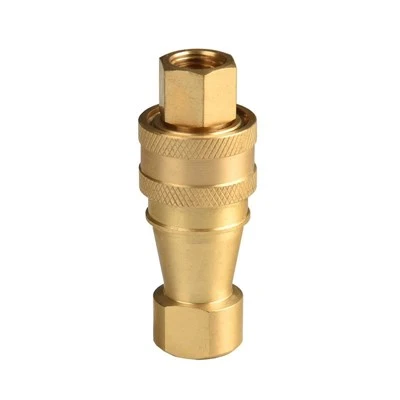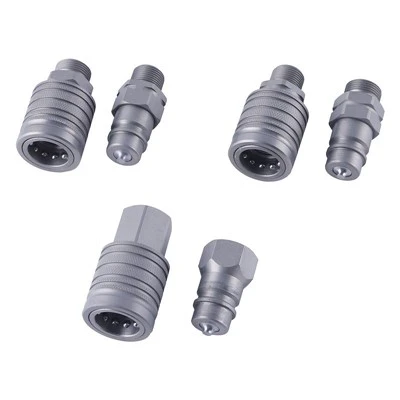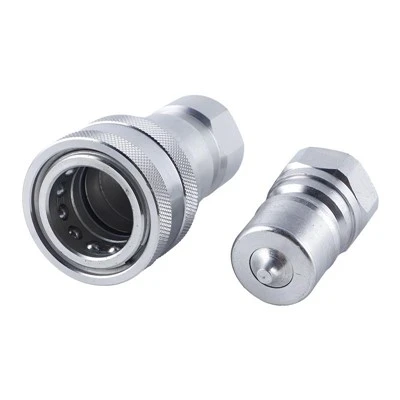

The precautions for using quick-connect couplings are as follows:
First, before installing or removing a quick-connect coupling, ensure that the pressure within the pipeline has been completely released to prevent accidental injury or equipment damage caused by a sudden release of pressure. Residual pressure in the pipeline could lead to dangerous situations such as spraying or explosions.
Second, select a coupling of the appropriate specification to ensure it matches the size of the connected pipeline. An unsuitable coupling may result in a loose connection or leakage, thereby compromising the system's normal operation and safety.
During use, keep the quick-connect coupling clean. Foreign matter, such as dust or debris, can enter the coupling and impair its sealing performance and service life. Regularly clean and maintain the coupling by wiping its surface with a clean cloth or solvent.
Additionally, avoid subjecting the quick-connect coupling to excessive twisting or pulling. Excessive external force can cause deformation, damage, or seal failure. Follow correct procedures during connection and disconnection, avoiding the use of excessive force or improper handling techniques.
Furthermore, for pipelines conveying special media-such as corrosive substances-select couplings with appropriate corrosion resistance to prevent corrosion from compromising performance and longevity.
Also, pay attention to the operating environment. Avoid using the couplings in harsh conditions such as high temperatures, low temperatures, or high humidity, as these environments can affect material properties and reduce reliability.
Finally, regularly inspect the sealing performance and connection status of the quick-connect coupling. If issues such as poor sealing or loose connections are detected, repair or replace the unit promptly to ensure the safe operation of the system.