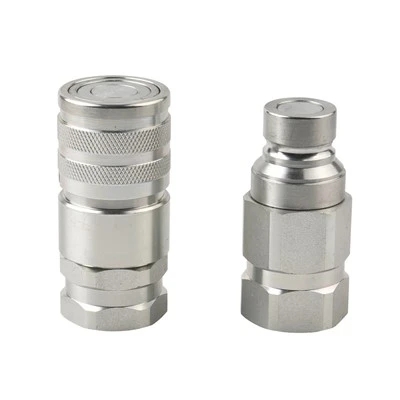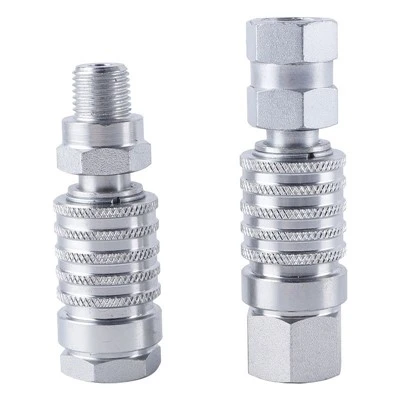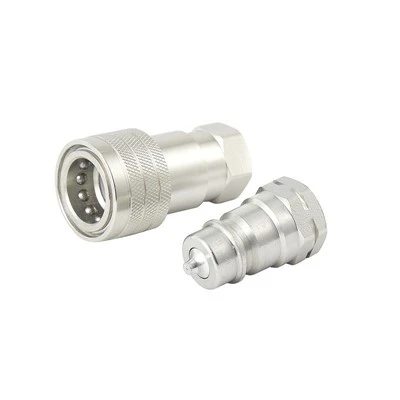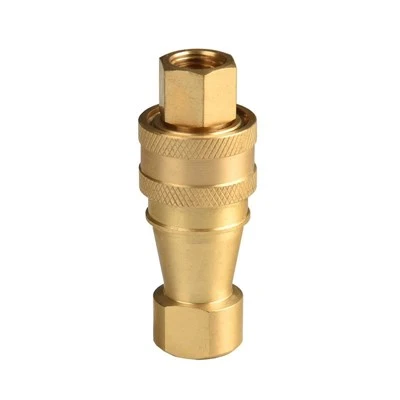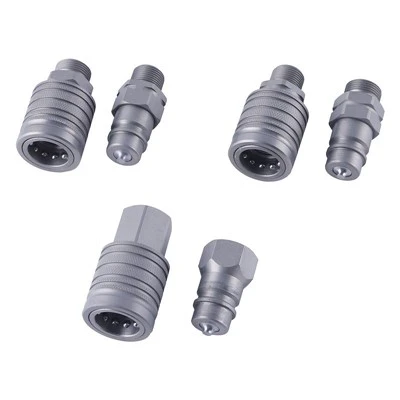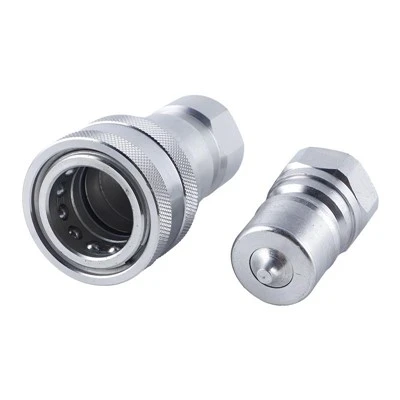

Quick-connect coupling sizes vary depending on the application and requirements; common sizes include DN15 (1/2"), DN20 (3/4"), DN25 (1"), DN32 (1-1/4"), DN40 (1-1/2"), and DN50 (2"). These specifications are usually designated by nominal diameter (DN) or in inches. Selection requires a comprehensive assessment of factors such as flow rate, pressure, and the medium involved in the specific application.
Quick-connect couplings are widely used in industries such as manufacturing, construction, and water conservancy, and selecting the right size is crucial for ensuring proper system operation. So, what sizes are generally used? This actually depends on several factors, including required flow rate, operating pressure, the type of medium, and the connection method.
Common Sizes
Common sizes for quick-connect couplings include DN15 (1/2"), DN20 (3/4"), DN25 (1"), DN32 (1-1/4"), DN40 (1-1/2"), and DN50 (2"). These specifications are based on nominal diameter (DN) or inches and represent the coupling's inner diameter. A larger inner diameter allows for higher flow capacity, though the effects of pressure and the medium must also be considered.
Selection Criteria
Flow Rate Requirements: Flow rate is the primary factor when selecting a coupling size. High flow requirements usually necessitate a coupling with a larger inner diameter to ensure smooth fluid passage.
Operating Pressure: Operating pressure significantly influences size selection. In high-pressure environments, couplings capable of withstanding higher pressures must be chosen to ensure system safety.
Medium Type: Different media impose varying requirements on coupling materials and sizes. For instance, corrosive media may require couplings made of specific materials and in specific sizes to ensure corrosion resistance and longevity.
Connection Method: The connection method also affects size selection. For example, threaded couplings may require a larger outer diameter to accommodate the thread dimensions. Practical Application Examples
Take quick-connect water fittings as an example: for household use, DN15 (1/2") or DN20 (3/4") fittings are typically selected to meet standard flow requirements. In contrast, industrial or commercial settings may require larger fittings-such as DN40 (1-1/2") or DN50 (2")-to accommodate higher flow rates and pressures.
In summary, the size specifications for quick-connect fittings vary depending on the application scenario and specific needs. When making a selection, it is essential to consider multiple factors-such as flow rate, pressure, the medium involved, and the connection method-to ensure the fitting's performance and safety.