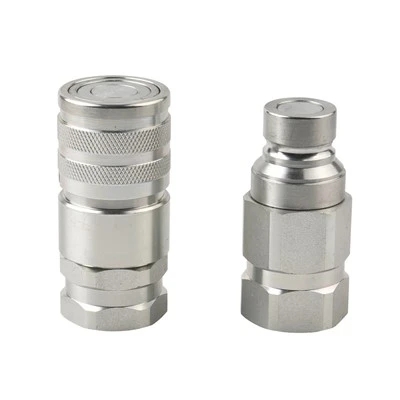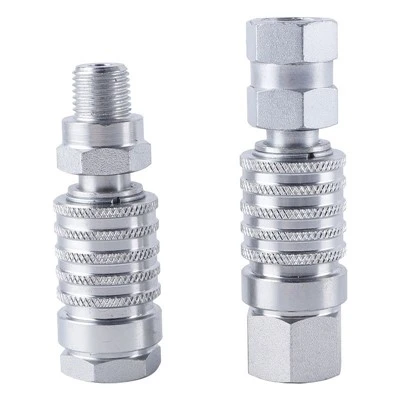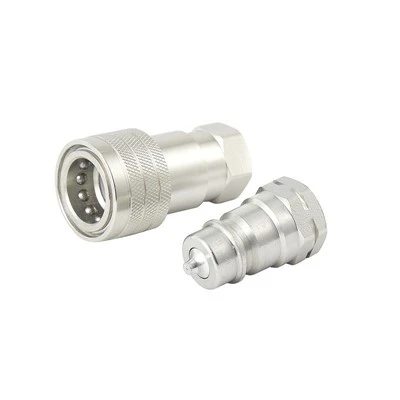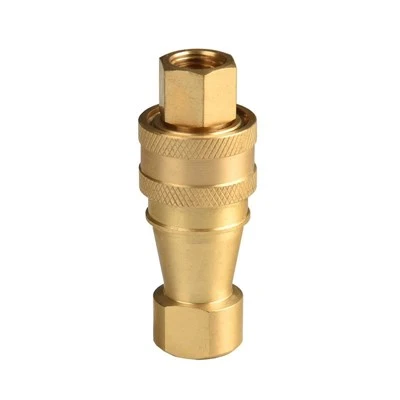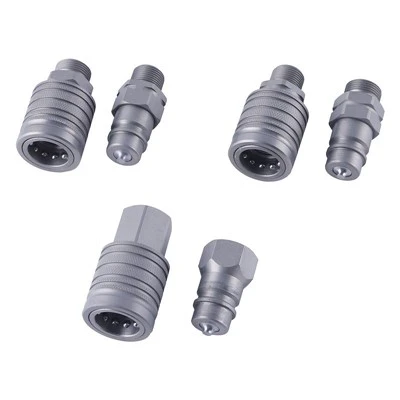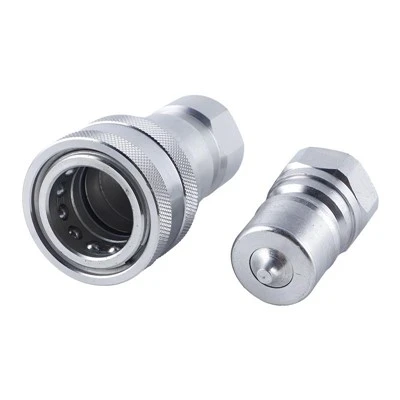

1. Fluid type and temperature (Select a quick-connect coupling with body and seal materials suitable for the specific fluid and temperature.)
Suitable body and seal materials vary depending on the fluid. For example, steel couplings are recommended for air applications, while brass or stainless steel is preferred for water.
2. Fluid pressure (Select a quick-connect coupling with a pressure rating suitable for the fluid pressure.)
Fluid pressure is a critical factor in selection. Hydraulic quick-connect couplings are available in a range from 5.0 MPa (51 kgf/cm²) to 68.6 MPa (700 kgf/cm²); their internal construction varies according to their pressure-handling capabilities.
3. Automatic shut-off valve construction (Select a coupling with a valve configuration suitable for the piping application.)
Valve configurations include double shut-off, single shut-off, and straight-through (open) types. Note that with the exception of the double shut-off type, fluid will leak from the piping when the coupling is disconnected.
4. Operating environment (Select a coupling with a construction and materials suitable for the operating environment.)
Consider factors such as humidity, dust levels, and corrosiveness when selecting the coupling type, body material, and seal material.
5. Verify thread compatibility
When using products from different brands, it is best to pair the socket and plug from the same manufacturer. If cross-brand usage is necessary, consult the supplier's technical staff to confirm compatibility before use.
6. Mounting configuration and dimensions
Determine the coupling model and material, and specify the mounting configuration and dimensions that match the piping requirements. Note that dimensions are related to fluid flow rate.