


Double-shutoff (valved at both ends), open-flow (unvalved at both ends), and single-shutoff (valved at one end).
Double-shutoff (Valved at both ends)
Disconnected state: When the socket sleeve is shifted to the other end, the stainless steel balls automatically roll outward; the plug disconnects due to the force of the valve springs in both the socket and plug, causing both valves to close instantly and block fluid flow.
Connected state: When the plug is inserted into the socket, the sleeve returns to its original position under spring force, and the steel balls roll inward to lock the plug securely; simultaneously, the valves in the socket and plug push against each other to open, allowing fluid flow, while an O-ring completely prevents fluid leakage.
Open-flow (Unvalved at both ends)
Disconnected state: When the socket sleeve is pushed to the other end, the steel balls automatically roll outward, allowing the plug to be removed; since neither the plug nor the socket has a valve, fluid flows out.
Connected state: When the plug is inserted into the socket, the sleeve is pushed back to its original position by spring force, locking the steel balls and allowing fluid flow; an O-ring prevents fluid leakage.
Single-shutoff (Valved at one end)
Disconnected state: When the socket sleeve is shifted to the other end, the stainless steel balls automatically roll outward; the plug is ejected by the force of the valve spring, and the valve closes automatically to block fluid flow.
Connected state: When the plug is inserted into the socket, the valve opens to allow fluid flow, the sleeve returns to its original position under spring force, and the stainless steel balls lock the connection between the plug and socket; an internal seal completely prevents fluid leakage.
Classification Of Quick-Connect Coupling Structures
Popular Products
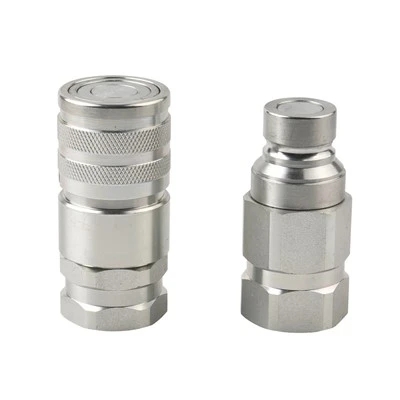
ISO 16028 Flat Face Hydraulic Quick Couplings
The KIS-FF ISO 16028 Flat Face Hydraulic Quick Coupling is designed for clean, efficient and reliable connection of...
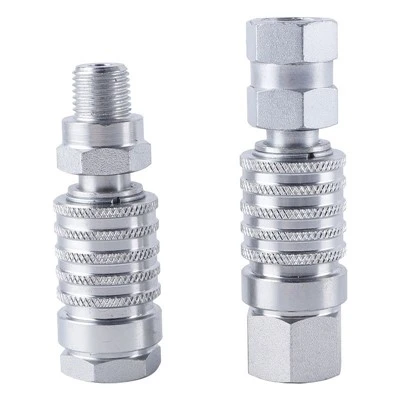
Flat Face Diagnostic Hydraulic Quick Connect
The PD Diagnostic flat face hydraulic quick connect is designed for fast and reliable pressure testing and...
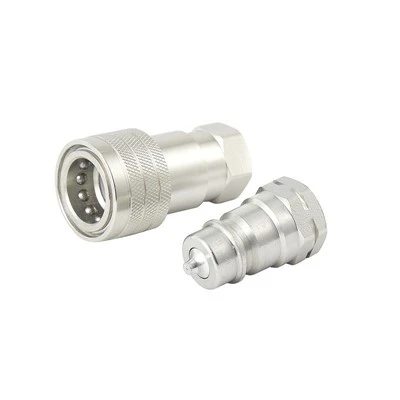
ISO 7241-A Hydraulic Quick Couplers
The ISO 7241-A Hydraulic Quick Couplers is designed for reliable connection and disconnection in hydraulic systems....
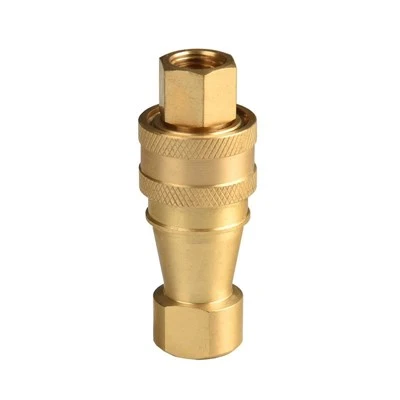
KZD Brass Hydraulic Quick Couplings
The KZD Brass Hydraulic Quick Couplings from the POOLKE KZD Series are designed for reliable fluid connection in...
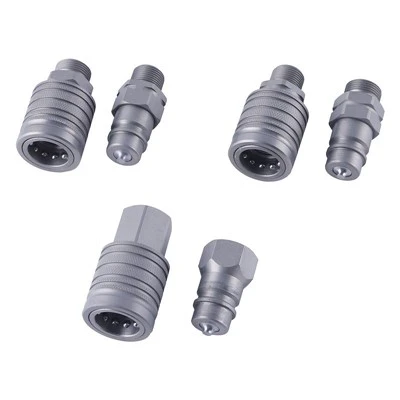
ISO 7241-A Push-Pull Hydraulic Quick Couplings
The KIS-PP ISO 7241-A Push-Pull Hydraulic Quick Coupling is designed for fast and convenient connection of hydraulic...
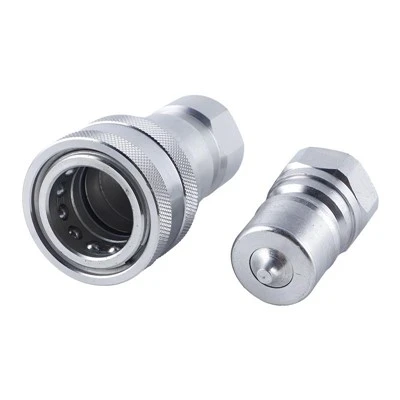
ISO 7241 B Hydraulic Quick Couplings
The ISO 7241 B Hydraulic Quick Couplings from the POOLKE KIS-B Series is designed for reliable hydraulic connection...