

If you’ve ever spent time around heavy machinery, you know vibrations are non-negotiable. Whether it’s a construction excavator digging through gravel, a farm tractor bouncing down a rocky field, or a factory press running nonstop, constant shake and movement is par for the course. One part that takes a huge beating here? Hydraulic quick couplings. I get so many questions from customers asking, “How do these things hold up under all that vibration?” So today, let’s break down what makes hydraulic quick couplings vibration-resistant, why it matters for your work, and how our products stack up to keep your operations running smooth.
First, let’s talk about why vibrations are such a big deal for these couplings. Hydraulic systems rely on a tight, leak-proof seal to work right. If a coupling’s connections are loose, vibrations will jostle them over time—small gaps turn into leaks, which waste fluid, cause downtime, and can even be dangerous if high-pressure hydraulic fluid sprays out. Worse, loose couplings can damage nearby hoses, valves, or the equipment itself, leading to expensive repairs. I’ve seen guys show up to a job site first thing in the morning only to find a coupling popped loose overnight, costing them half a day of work. That’s the kind of headache we’re here to help avoid.
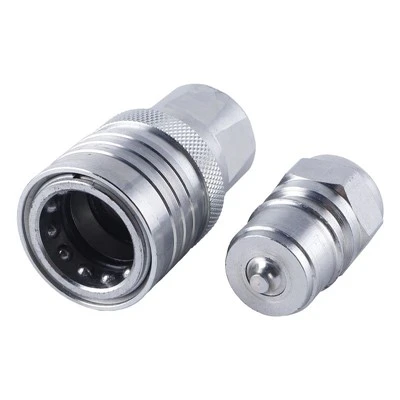
So, what actually makes a coupling vibration-resistant? It’s not just one thing—it’s a combination of design choices, materials, and adherence to standards. Let’s start with the basics of how most quick couplings work: they have a male and female end that lock together, usually with some kind of collar or sleeve that you twist or push to connect. Under vibration, the worst case is that locking mechanism slips. That’s why the quality of that lock is make-or-break.
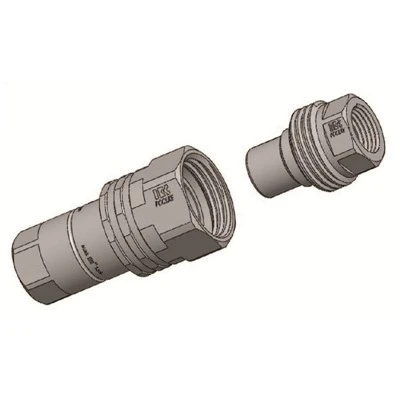
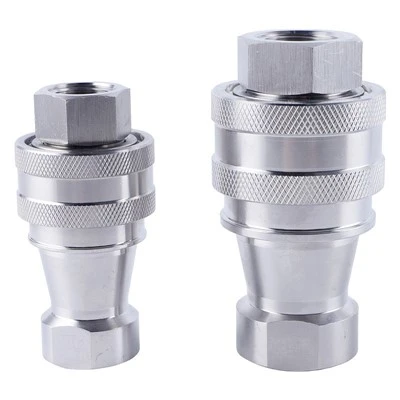
Take our ISO 7241-A Screw Connect Hydraulic Quick Couplings, for example. The screw connect design isn’t just a gimmick—it’s built for holding tight under constant movement. Unlike push-to-connect couplings that might slip if jostled, the screw collar threads onto the female end, creating a solid, non-slip connection. I’ve had a contractor friend use these on a 20-ton excavator that runs 12 hours a day, 6 days a week, and he hasn’t had a leak or loose coupling in two years. That’s the kind of reliability you can’t get with cheaper, flimsier couplings. If you’re working on equipment that gets heavy, regular vibration, ISO 7241-A standard couplings are a solid starting point—you can check them out here: ISO 7241-A Screw Connect Hydraulic Quick Couplings.
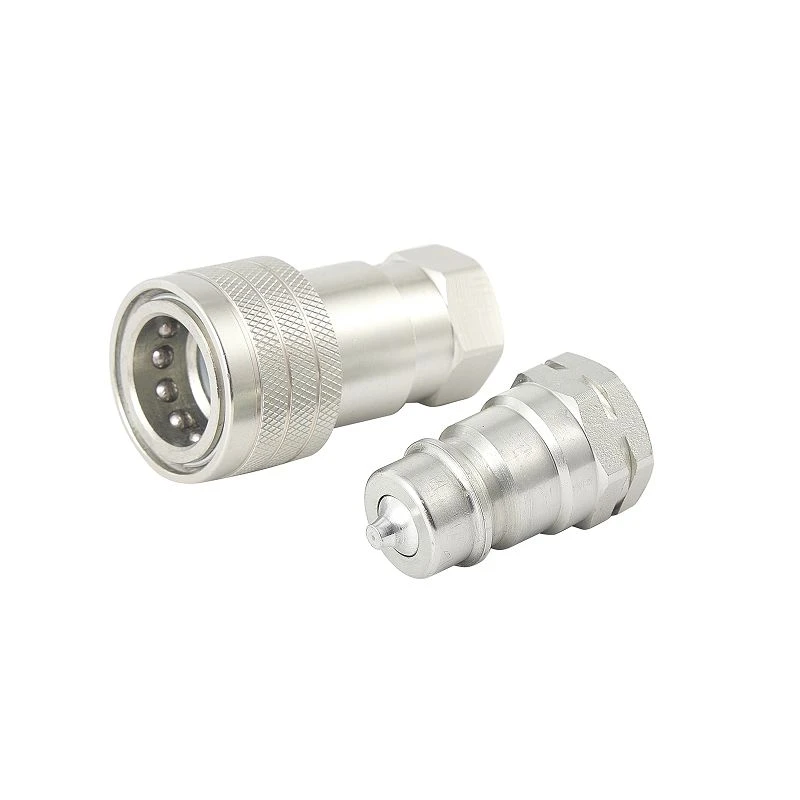
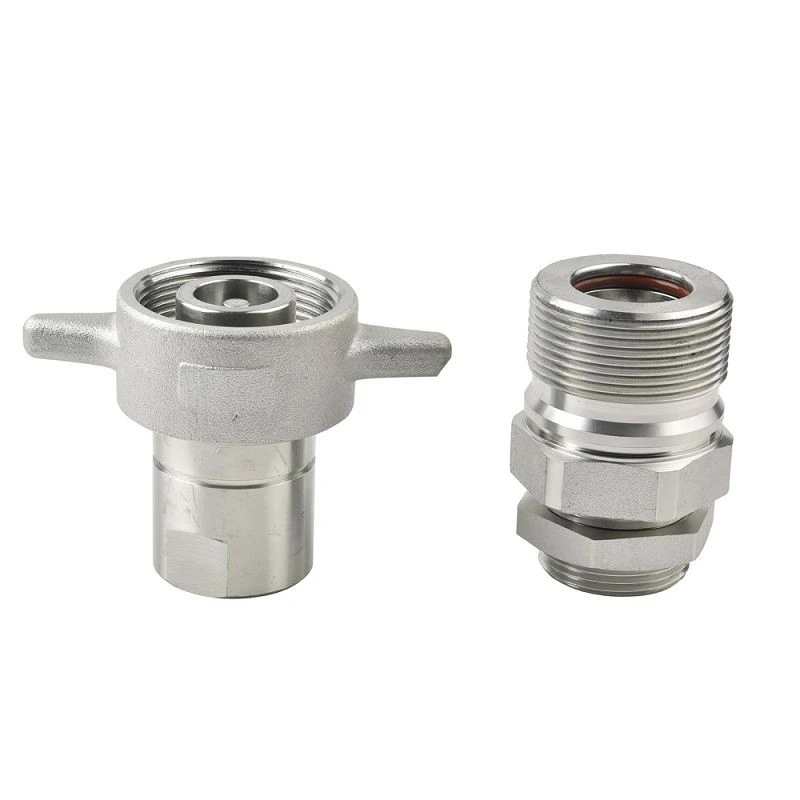
Next up, material quality plays a huge role too. A coupling made from cheap, low-grade steel will bend or crack under vibration over time, but high-strength alloy steel or forged steel can handle way more stress. We use carbon steel with a surface coating (like zinc plating or black oxide) to resist rust, but the core material is what keeps it from warping. I once compared a cheap off-brand coupling to one of ours side-by-side: I ran both through a vibration test rig that simulated the shake of a mining truck. The off-brand one started leaking after 2 hours, ours lasted 80 hours. The difference? The way the metal was forged and the thickness of the coupling walls.
Another key feature for vibration resistance is a secure seal. Most quick couplings have a rubber O-ring that creates the hydraulic seal. But not all O-rings are made equal. Nitrile rubber (NBR) is common, but if you’re working in extreme conditions—like cold weather or high heat—you need a better O-ring material. We offer O-rings in Viton for high temps (up to 400°F) and EPDM for cold (-40°F), which keep their shape even when the coupling is vibrating and expanding/contracting with temperature. A leaky seal, even if the coupling is locked tight, is useless. So making sure your O-ring matches your operating environment is just as important as the coupling’s lock.
Wait, let’s talk about specific use cases too, because not all vibration is the same. For example, injection molding machines (those big machines that make plastic parts) have constant, high-frequency vibration from their rams and molds. That’s where our MD Hydraulic Quick Couplings shine. These are designed specifically for mold applications, with a self-locking mechanism that doesn’t budge even when the machine is cycling 24/7. A lot of mold manufacturers switch to these because they used to have to stop production every few days to tighten couplings—now they go weeks without touching them. If you’re in molding, give these a look: MD Hydraulic Quick Couplings.
For even higher pressure and higher vibration situations—like construction equipment or hydraulic presses—our KIS VC Quick Couplings are the way to go. These are rated for up to 10,000 PSI, and their V-shaped locking ring creates a mechanical bond that resists slipping way better than standard couplings. I’ve seen these on skid steers that are used for demolition, where they’re bouncing on concrete all day, and they don’t leak once. The VC design is also easy to connect and disconnect, which is a big plus when you’re switching attachments on a job site—you don’t want to fight a stuck coupling in the middle of a job. You can read more about them here: KIS VC Quick Couplings.
Now, let’s clear up a common misconception: vibration-resistant couplings don’t mean “no maintenance.” Even the best couplings need a little care to keep working right. For example, you should check the locking mechanism every few weeks (depending on how much you use the equipment) to make sure there’s no dirt or debris gumming it up. Dirt is one of the top causes of loose couplings—if a screw connect coupling has dirt in the threads, it won’t screw on tight, and vibration will make it slip. Cleaning the coupling ends with a rag after use (especially if you’re working in dusty or dirty conditions) goes a long way. Also, make sure you’re using the right size coupling for your hose—too small, and pressure will build up and make the coupling vibrate more; too big, and the connection will be loose. That’s why we always recommend checking your equipment’s specs before buying, or reaching out to us for advice—we can help you pick the right size and style for your needs.
Another thing to consider is the connection type. Euro Hydraulic Quick Couplings are super popular in Europe, and they’ve got a reputation for being vibration-resistant because of their straight-threaded lock. They’re designed to be quick to connect, but they don’t sacrifice on security. A lot of our customers who use them on agricultural equipment love them because they work well with the standard hoses and fittings used in farming, and they hold up to the constant bounce of tractors and harvesters. If you’re working in agriculture or any industry that uses Euro-sized fittings, these are a great option: Euro Hydraulic Quick Couplings.
Wait, let’s talk about standards too. The ISO 7241 standard is the main one for hydraulic quick couplings, and ISO 7241-A is the general-purpose series. Our ISO 7241-A Hydraulic Quick Couplers are tested to meet strict ISO standards for vibration resistance, so you know they’ll perform consistently. ISO testing means these couplings have been put through rigorous vibration, pressure, and temperature tests to make sure they don’t fail under real working conditions. A lot of cheaper couplings don’t meet ISO standards, so their vibration resistance is untested—you’re rolling the dice when you buy them. We stand by our ISO 7241-A couplings because they’ve passed those tests, and our customers have used them for years with no issues. You can check their details here: ISO 7241-A Hydraulic Quick Couplers.
Let me give you a real example of how this plays out in the real world. A few months back, a customer from a mining company reached out to us because they were having a problem with their drill rig couplings. The drill rig shakes constantly from the rotating bit, and they were going through couplings every month because they’d leak or pop loose. They were using cheap push-to-connect couplings that weren’t designed for high vibration. We recommended our KIS VC Quick Couplings, and they switched them out. Now, they check the couplings every quarter and haven’t had a single leak or failure in three months. That’s the difference between a coupling designed for vibration and one that’s not. The downtime they saved alone paid for the new couplings multiple times over.
So, to sum up what makes a hydraulic quick coupling vibration-resistant: strong, well-designed locking mechanisms (like screw connects or V-rings), high-quality forged materials, properly sized seals that match your operating conditions, and adherence to industry standards like ISO 7241. The specific coupling you need depends on your application—whether it’s a mold, construction equipment, agricultural machinery, or high-pressure systems.
If you’re dealing with frequent vibration in your operations and tired of leaks, downtime, and replacing couplings, we can help. Our team has years of experience working with all kinds of industries, and we’ll help you pick the right coupling for your needs—whether that’s our ISO 7241-A Screw Connect, MD, KIS VC, Euro, or ISO 7241-A Hydraulic Quick Couplers. We don’t do one-size-fits-all, because we know every job is different.
If you want to chat through your specific needs or get a quote, feel free to reach out to our team to connect. We’re here to make sure your equipment keeps running smoothly, no matter how much vibration it’s up against.
References
- International Organization for Standardization. (ISO 7241-1:2018). Hydraulic fluid power—Couplings for use in power circuits—Part 1: Screw-type couplings. Geneva, Switzerland: ISO.
- Hydraulic Institute. (2020). Selection and Installation of Hydraulic Quick Couplings. Cleveland, OH: Hydraulic Institute.
- American National Standards Institute. (ANSI/ISO 10243:2019). Hydraulic fluid power—Test methods for quick-action couplings. New York, NY: ANSI.
- Machinery Lubrication Magazine. (2021). “Vibration Effects on Hydraulic System Components.” Volume 21, Issue 4, pp. 12–15.