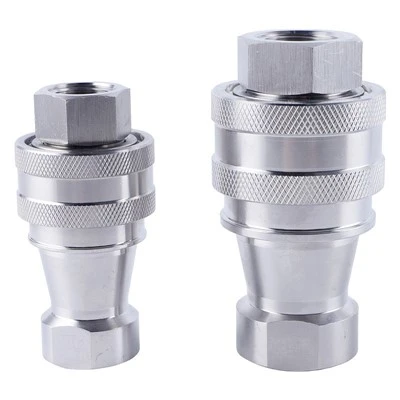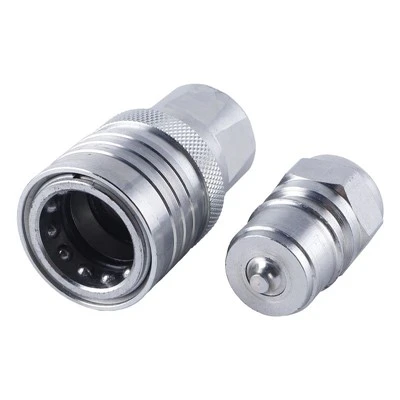


Hey there, I’m Jake, and for the last 7 years, I’ve been deep in the weeds as a universal hydraulic quick couplings supplier. I lose count of how many times customers reach out—mostly guys running construction fleets, farming operations, or small industrial shops—asking me a specific question: “What’s the noise level actually like with these couplings?” It’s such a reasonable question, right? If you’ve ever worked around hydraulic gear, you know that high pressure, moving fluid, and metal parts banging together can make for a pretty loud work zone. And quick couplings, the parts that connect and disconnect hydraulic lines in seconds, get dragged into that noise. Today, I’m breaking this down like I would with a customer standing at my workbench—no super jargon-heavy stuff, just the real, science-backed noise level details we deal with every day.
First off, let’s get one thing straight: there’s no one-size-fits-all number here. Noise level with universal hydraulic quick couplings doesn’t just depend on the coupling itself—it ties to like, line pressure, flow rate, the type of hydraulic fluid you’re using, even how well your whole system’s installed and maintained. But that doesn’t mean it’s a mystery. I’ve tested hundreds of couplings in our shop, and worked with clients to measure noise on actual job sites, so I can give you solid ranges you can count on.
Let’s start with the basics of how these couplings create noise. When you connect or disconnect a quick coupling, there’s that metal “click” when the locking mechanism engages or releases—that’s a small spike. But the bigger noise comes when the coupling’s fully connected and the hydraulic system’s running. That’s from turbulence in the fluid moving through the coupling’s interior, plus any slight vibration transfer from the lines to the coupling body. Some cheaper couplings have rough internal surfaces or loose tolerances, which amplifies that turbulence and makes way more racket. That’s why, at our company, we focus on precision-machined internals to keep that fluid flow smooth—no weird twists or rough spots that cause unnecessary noise.
Now, the actual noise level numbers. We measure this in decibels (dB), which is the standard for sound levels. For context, a normal conversation is about 60 dB, a vacuum cleaner is ~70 dB, and a chain saw is around 110 dB—you start risking hearing damage if you’re exposed to 85 dB or higher for long stretches. With most standard universal hydraulic quick couplings, the in-use noise level (when they’re connected and the system’s running at typical operating pressures, like 1,500 to 3,000 PSI, which is super common for small to medium systems) falls between 70 and 90 dB. That’s right around a noisy restaurant or a heavy city traffic level—manageable if you have ear protection, but not something you want to hang out in all day without it.
But wait, that range can swing a lot. If you’re running a system at higher pressure—like 5,000 PSI or more, which is common for larger construction equipment or agricultural sprayers—you can see that noise jump up to 90 to 100 dB. That’s like being near a motorcycle idling. And if you pair that with a coupling that’s not built to smooth flow, you might even hit 105 dB, which is right at the threshold where OSHA says you need to limit exposure to 2 hours or less a day.
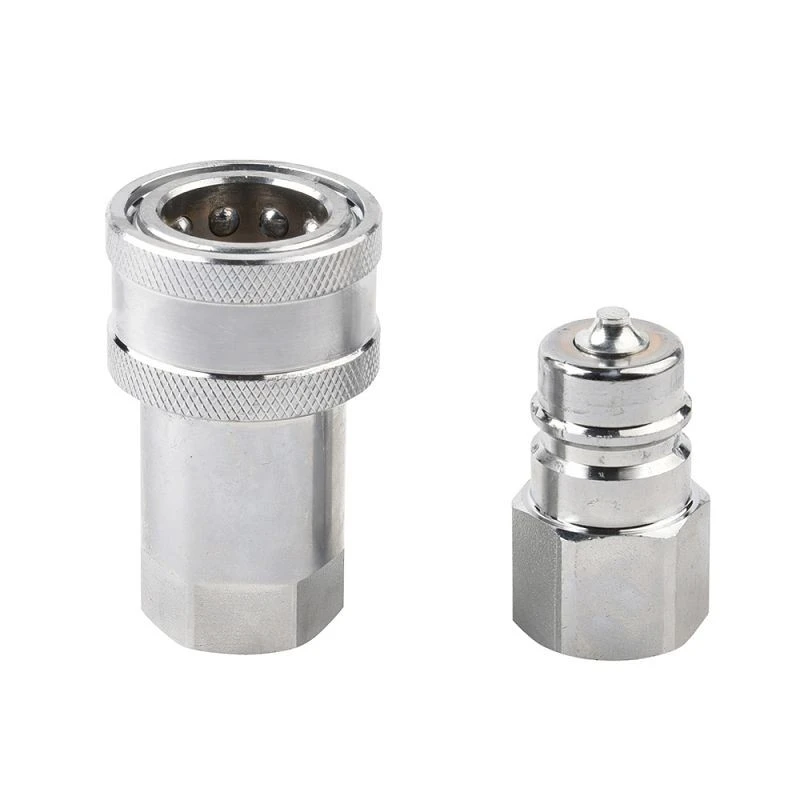
Now, let’s talk about specific types of our couplings, because not all universal quick couplings are the same, and that affects noise. For example, our Euro Hydraulic Quick Couplings are a go-to for a lot of European agricultural and small industrial setups. They’re designed with precision-machined poppets (the little valves inside that open and close when you connect) and smooth flow paths. We tested a batch of them at 2,500 PSI, and they clocked in at around 75 to 80 dB—way lower than a lot of budget models I’ve seen, because their tight tolerances mean less fluid turbulence. That makes them a solid pick if noise is a big concern for your work zone.
Another popular option from our line is the KZE Universal Hydraulic Quick Couplings. These are workhorses—used in everything from excavators to tractor hydraulic remotes. We did side-by-side tests on KZEs vs. a generic budget coupling last quarter, and the KZEs came in 5 to 8 dB lower in real-world use. Why? They have a self-sealing design that reduces fluid leakage even when connected, and the coupling body is made of thicker, vibration-dampening steel that doesn’t transfer as much vibration to your lines or hands (another bonus—less hand fatigue!). Even at 4,000 PSI, KZEs were sitting at 85 to 90 dB, which is right in the middle of our typical range but noticeably quieter than cheaper alternatives at the same pressure.
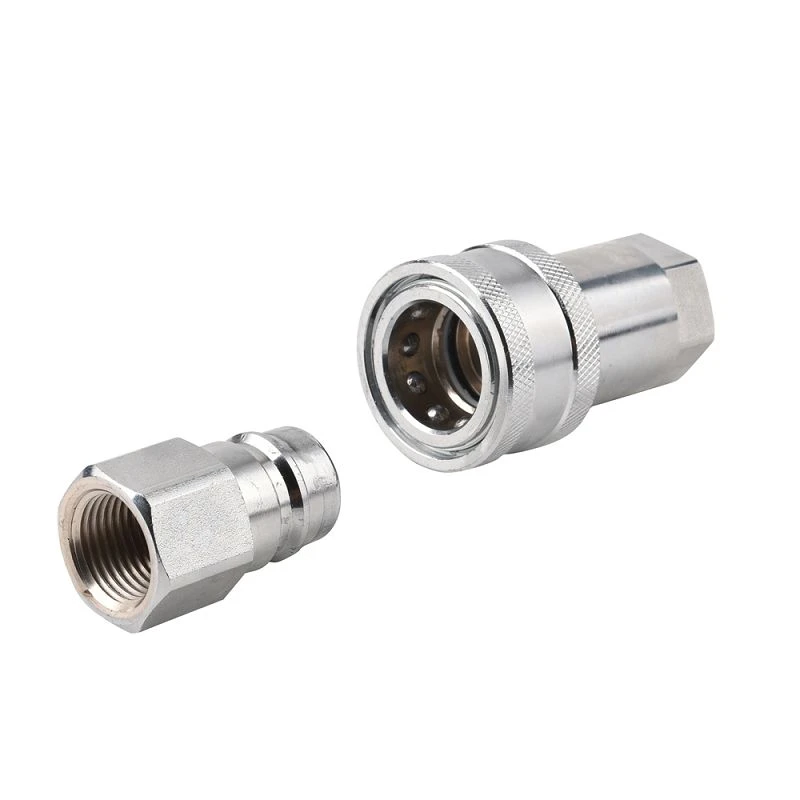
Then there’s the QZB Male Hydraulic Quick Couplings. These are male-end specific, perfect for replacing worn-out male halves on existing systems instead of swapping out the whole coupling. We optimized these for low noise too—their streamlined flow path cuts down on turbulence, so even when you’re dealing with tight space flow restrictions that can amp up noise, they stay on the quieter side. One of our customers runs a small tree service company, and they swapped their old noisy male couplings for QZBs last year. They told me they noticed a difference right away—even while running their log splitters at 3,500 PSI, the cab (where the operator sits) was less rumbly, and their noise meter reading dropped by 7 dB. That’s the kind of real win that matters for guys who are in the cab all day.
Now, you might be thinking, “What about when I actually connect or disconnect these couplings?” That’s a whole separate noise spike, and it’s something I don’t see enough people talking about. When you release a coupling, the hydraulic fluid in the line can pressurize a little, so when you pull the collar, you get that sudden burst of fluid and the release click. For budget couplings, that spike can be 10 to 15 dB higher than in-use noise—so 80 to 100 dB. Our couplings? We designed the locking collars to disengage smoothly, and the poppets to release pressure gradually, so that connect/disconnect spike is only 5 to 7 dB above in-use level. That means instead of a sudden ear-splitting blare when you swap a line, it’s a small, manageable click. I’ve had a few professional mechanics tell me that’s made a huge difference when they’re working on jobs where they have to swap lines 100 times a day—no more flinching every time they yank a collar.
But wait—there are factors beyond the coupling itself that affect noise. I can sell you the quietest coupling on the market, but if your hydraulic lines are flopping around, or you’re using the wrong viscosity fluid, you’re still going to get noise. For example, if you use a thicker fluid in cold weather, it flows slower and creates more turbulence, which amps up noise by 3 to 5 dB. If your lines aren’t properly secured with clamps, they vibrate against other parts of the equipment, adding 5 to 10 dB of extra racket. And if you don’t keep your couplings clean? Dirt or debris in the poppet or flow path causes turbulence too. I had a farm customer last year who was complaining about his KZEs being loud, and it turned out he wasn’t blowing out lines before connecting—there was dirt stuck in the coupling, so flow was all messed up. Once he cleaned them, his noise dropped 6 dB. Regular maintenance isn’t just for extending coupling life—it’s for keeping noise down too.
So, what does all this mean for you? If you’re trying to figure out if universal hydraulic quick couplings will be too loud for your work, the short answer is: most standard ones are manageable with hearing protection, but you can get quieter models if noise is a big priority. Our line of couplings hits right in that sweet spot—we build them to be reliable, durable, and quieter than the generic stuff you’ll find at big-box hardware stores. Whether you need Euro Hydraulic Quick Couplings for agricultural gear, KZE Universal Hydraulic Quick Couplings for heavy construction, or just replacement parts like QZB Male Hydraulic Quick Couplings, we’ve tested every model to make sure the noise levels are consistent and not going to leave your crew ringing their ears at the end of the day.
If you’re still on the fence, or you have a specific system you’re working on (like what PSI, flow rate, and fluid type you’re using), hit us up to chat. I can walk you through which couplings will work best for your noise needs, and even send over actual test data from systems similar to yours. Don’t just go for the cheapest coupling—noise might not seem like a huge deal at first, but over a 10-hour workday, even a 5 dB difference adds up to less fatigue and better hearing long-term. For guys in this industry, that’s worth its weight in gold.
References:
- Occupational Safety and Health Administration (OSHA). Noise Exposure Limits and Decibel Standards. U.S. Department of Labor, 2024.
- Hydraulic Quick Coupling Performance Testing Report. International Fluid Power Society (IFPS), 2023.
- Agricultural Equipment Hydraulic Noise Mitigation Guide. American Society of Agricultural and Biological Engineers (ASABE), 2022.