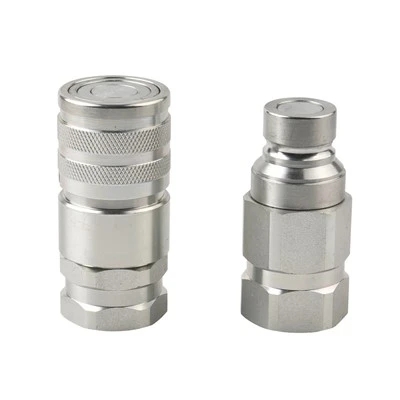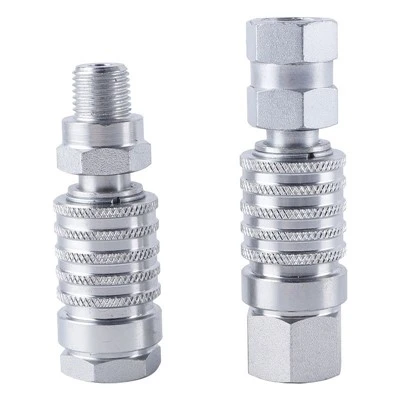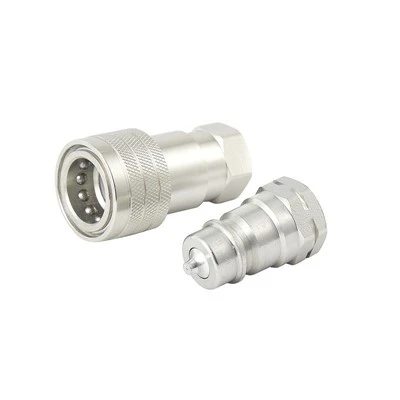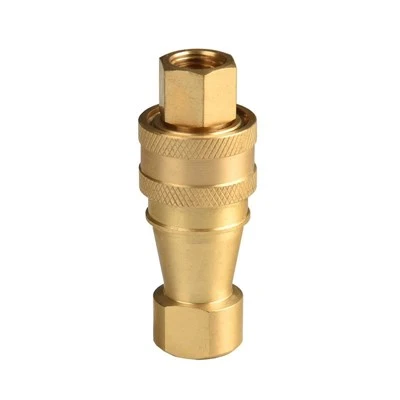

Comparison of Structure
Compression fittings have a relatively simple structure, consisting mainly of two parts: a clamp and a sleeve (ferrule). The clamp secures the pipe, while the sleeve connects the two pipes. To connect them, the two pipes are inserted into the sleeve, and the clamp is then used to secure the assembly.
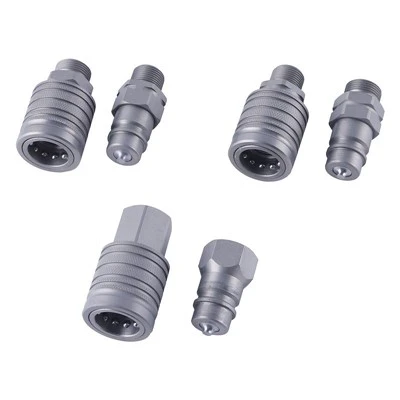
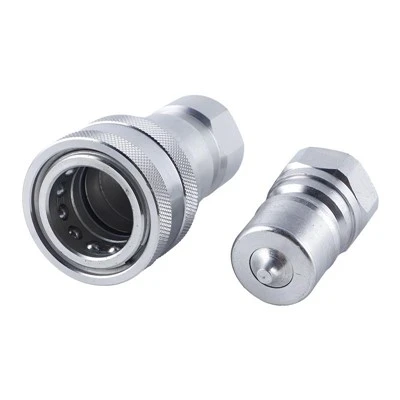
Quick-connect fittings have a relatively complex structure, comprising several components such as a plug, a socket, a sealing gasket, and a spring. Connection is achieved by inserting the plug's protrusions into the socket's grooves and securing the assembly with a spring. A sealing gasket ensures a leak-proof connection.
Comparison of Connection Methods
The connection method for compression fittings is straightforward: simply insert the two pipes into the sleeve and secure them with the clamp. This method is best suited for smaller-diameter pipes and provides a relatively weak connection.
In contrast, the connection method for quick-connect fittings is more complex, requiring the plug's protrusions to be inserted into the socket's grooves and secured with a spring. This method is suitable for larger-diameter pipes, offers a strong connection, and ensures the joint does not easily come loose.
Comparison of Applications
Compression fittings are suitable for smaller piping systems, such as residential water supply lines. While their simple structure makes them convenient to use, the resulting connection is relatively weak, making them unsuitable for high-pressure piping.
Quick-connect fittings are suitable for larger piping systems, such as industrial pipelines. Their strong connection capability makes them ideal for high-pressure applications, though their complex structure makes them more cumbersome to use.
Other Differences
The clamps and sleeves of compression fittings are typically made of copper, whereas the plugs and sockets of quick-connect fittings are usually made of materials like stainless steel, offering superior corrosion resistance.
Compression fittings provide a weaker connection and are unsuitable for high-pressure piping, whereas quick-connect fittings provide a strong connection suitable for high-pressure applications.